Number One Jersey, Sportswear, Corporate clothing, school college dress & Other Apparel Manufacturing in Nepal: A Guide to Custom Clothing, Private Label & Bulk Garment Production
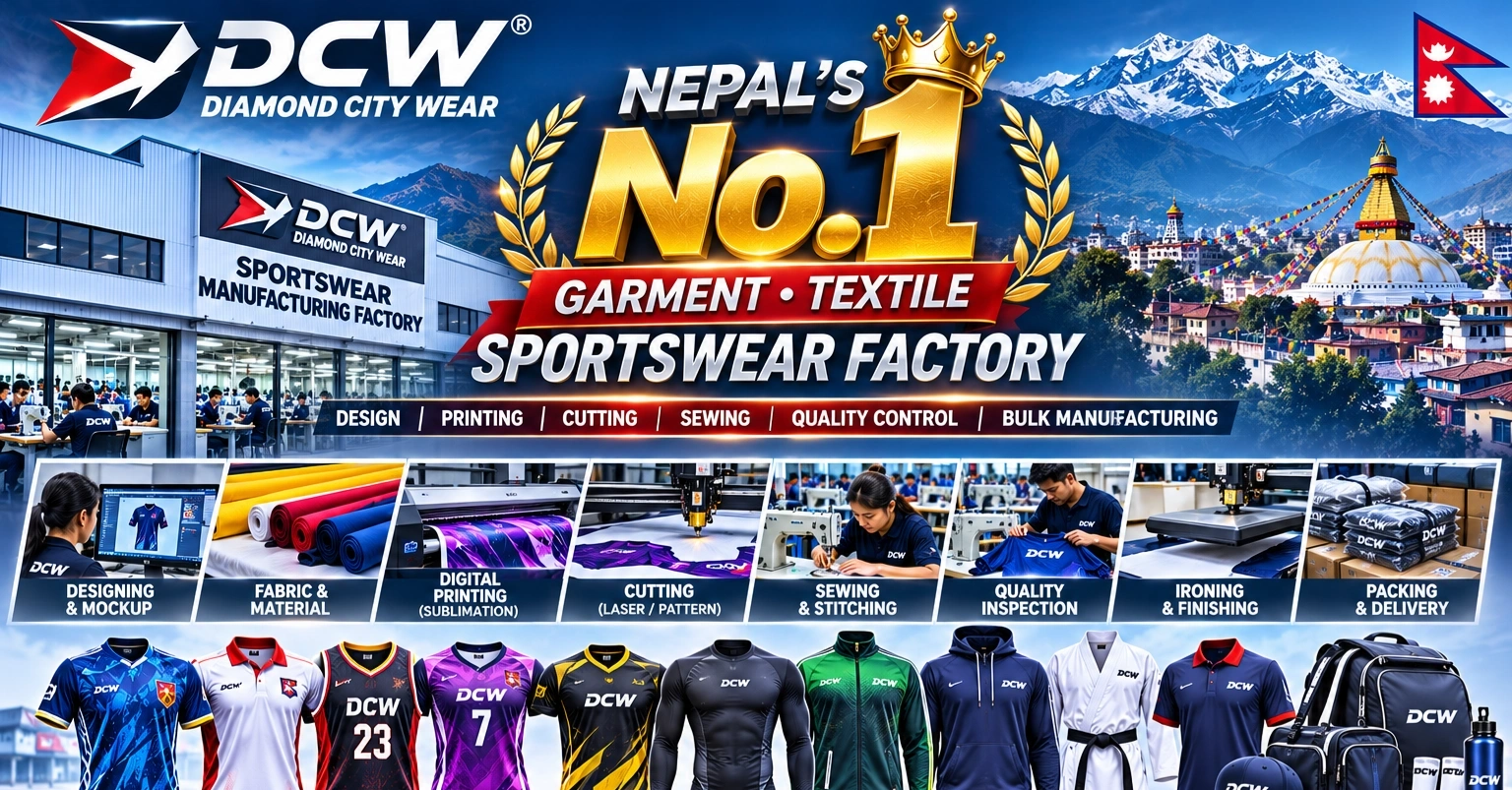
The apparel and garment industry plays an important role in supplying clothing to retailers, businesses, sports organizations and fashion brands. As businesses look for manufacturing partners, Nepal is one of the markets they may consider for custom garment production, apparel sourcing and clothing supply. Whether you are launching a clothing brand, developing a private-label collection, sourcing sportswear or ordering garments in bulk, finding a suitable manufacturing partner is an important part of your business. Diamond City Wear (DCW), based in Kathmandu, Nepal, welcomes enquiries for custom sportswear and apparel manufacturing requirements. Our product categories include custom jerseys, T-shirts, hoodies, jackets, tracksuits, polo shirts and other customized garments. This guide explains important apparel manufacturing terms, production models, clothing categories, sourcing considerations and how businesses can discuss their manufacturing requirements with DCW. 1. What Is Apparel Manufacturing? Apparel manufacturing is the process of turning fabric and other textile materials into finished clothing products. Depending on the product and production arrangement, the process may include: Product concept and design development Technical specifications and measurements Fabric and material selection Pattern making and sampling Fabric cutting Printing, embroidery or other customization Sewing and garment assembly Finishing and ironing Quality inspection Folding, packing and dispatch The exact process varies depending on the garment, order quantity, construction, materials and manufacturing agreement. Common apparel manufacturing categories include: Sportswear manufacturing Activewear manufacturing Athleisure production Casual clothing manufacturing Corporate apparel production Teamwear manufacturing Uniform production Private-label clothing Bulk garment production Customized promotional apparel For businesses looking for custom sportswear in Nepal, DCW welcomes enquiries about product design, customization and garment production. 2. Private Label Clothing Manufacturer in Nepal Private-label clothing allows a business to sell apparel under its own brand name rather than another manufacturer's brand. This model is useful for entrepreneurs, fashion startups, retailers, sportswear brands and established businesses looking to develop their own clothing collections. Private-label apparel products may include: Custom T-shirts Polo shirts Hoodies and sweatshirts Sports jerseys Training shirts Tracksuits Sports jackets Shorts Activewear Teamwear and uniforms Private-label customization options: Brand logo placement Custom neck labels Printed labels Custom colors Product artwork Sleeve and collar variations Packaging and presentation requirements Custom product designs Businesses interested in private-label manufacturing should provide their brand guidelines, product references, technical specifications and expected order quantities. Contact DCW to discuss whether your proposed private-label product can be accommodated. 3. Cut and Sew Manufacturers in Nepal Cut-and-sew manufacturing is a garment production method in which fabric is cut according to garment patterns and then sewn into finished clothing. It is commonly used for T-shirts, polo shirts, hoodies, jackets, shorts, tracksuits and other garments. Typical cut-and-sew production stages: Pattern development Fabric inspection Fabric spreading Cutting according to measurements Component preparation Sewing and assembly Finishing Quality inspection Businesses considering cut-and-sew production should confirm whether the manufacturer provides pattern making, fabric sourcing, sample development, cutting, sewing and finishing as separate or combined services. DCW welcomes enquiries for custom garment production and sportswear requirements. Share your product specifications to discuss the appropriate production arrangement. 4. Bulk Apparel Production in Nepal Bulk apparel production involves manufacturing garments in larger quantities for businesses, organizations, retailers and institutions. Bulk production can be suitable for: Clothing retailers Sportswear brands Wholesale distributors Schools and colleges Sports clubs Football and cricket teams Corporate companies Gyms and fitness centers Event organizers Promotional merchandise businesses Popular bulk apparel products include: Product category Examples Sportswear Jerseys, shorts, tracksuits Casualwear T-shirts, polo shirts Outerwear Hoodies, jackets, sweatshirts Corporate apparel Staff T-shirts, polo shirts Teamwear Custom jerseys and training apparel Promotional clothing Branded T-shirts and merchandise For bulk orders, businesses should provide a size breakdown, quantity per design, artwork, fabric requirements and delivery destination. DCW welcomes bulk custom sportswear and apparel enquiries. Pricing and production schedules depend on the confirmed product specifications and quantity. 5. Custom Textile Supplier in Nepal A textile supplier and an apparel manufacturer perform different roles. A textile supplier generally deals with fabric and related materials, while an apparel manufacturer turns materials into finished garments. Businesses sourcing textiles or finished clothing should clarify whether they need: Raw fabric Knitted fabric Woven fabric Printed fabric Dyed fabric Performance fabrics Garment accessories Finished apparel Customized sportswear For sportswear manufacturing, fabric selection can influence comfort, stretch, breathability, appearance, durability and garment performance. When contacting a supplier, specify the fabric composition, weight, construction, color, finish, quantity and intended use. DCW can discuss garment and sportswear requirements based on the materials and specifications provided. 6. Activewear Manufacturing in Nepal Activewear is clothing designed for exercise, sports, training and physical activities. It is an important category for fitness brands, gyms, sports clubs, retailers and businesses developing performance clothing collections. Activewear products include: Gym T-shirts Tank tops Workout shorts Training jerseys Sports leggings Sports tops Tracksuits Joggers Training jackets Compression-style apparel Fitness team uniforms Potential activewear customers: Gym and fitness brands Personal trainers Bodybuilding teams Yoga and Pilates studios Running clubs Cycling groups Sports academies Fitness influencers Sports retailers Private-label apparel businesses Activewear specifications should consider fabric composition, stretch, moisture management, fit, stitching, movement and intended exercise. DCW welcomes enquiries for custom gym wear, workout clothing, team training apparel and fitness merchandise. 7. Athleisure Production in Nepal Athleisure combines elements of athletic clothing and casual everyday fashion. It is designed for people who want clothing that can be worn for casual activities, travel, light exercise and everyday use. Popular athleisure products include: Casual sports T-shirts Oversized T-shirts Hoodies Sweatshirts Joggers Tracksuits Casual jackets Polo shirts Sports shorts Matching apparel sets Athleisure collections are useful for fashion startups, clothing brands, sportswear retailers, lifestyle businesses and promotional merchandise companies. Businesses developing athleisure products should focus on garment fit, fabric feel, color consistency, construction, branding and overall collection identity. DCW can discuss custom apparel concepts for businesses interested in sports-inspired casual clothing. 8. Fabric Mill Factory in Nepal A fabric mill and a garment factory are not the same. A fabric mill generally produces or processes fabric through activities such as knitting, weaving, dyeing or finishing. A garment manufacturer uses fabric to create finished clothing. Businesses searching for a fabric mill factory in Nepal should identify the type of textile production they require. Common textile categories include: Knitted fabrics Woven fabrics Polyester fabrics Cotton fabrics Blended fabrics Stretch fabrics Printed fabrics Dyed fabrics Technical textiles If you require fabric manufacturing rather than finished garment production, verify the supplier's actual machinery, production capabilities, fabric specifications and certifications. For DCW apparel enquiries, provide the required fabric details so the suitable garment production options can be discussed. 9. CMT Clothing Production in Nepal CMT stands for Cut, Make and Trim. It is a garment manufacturing arrangement in which the production partner performs specified cutting, sewing and finishing activities, generally using materials or components supplied or arranged by the customer. CMT production may involve: Fabric cutting Garment sewing Trimming Basic finishing Thread removal Garment inspection Packing according to the agreement CMT arrangements can suit clothing brands that already have fabric, patterns, designs and technical specifications. Before starting a CMT order, both parties should confirm: Who supplies the fabric? Who provides patterns and grading? Who purchases accessories? Who handles printing and embroidery? Who manages quality inspection? Who provides packaging? What are the production charges? What is the agreed production schedule? CMT services should be confirmed according to the manufacturer's actual production arrangement. 10. Full Package Production (FPP) in Nepal Full Package Production, commonly called FPP, is a manufacturing arrangement in which the production partner coordinates multiple stages of the garment supply chain. Depending on the agreement, this may include: Product development Material sourcing Pattern and sample development Fabric and accessory procurement Cutting and sewing Printing and embroidery Finishing Quality control Packing Shipment coordination FPP can be useful for clothing brands that want a single production partner to coordinate most of the manufacturing process. However, the scope of FPP differs between manufacturers. Businesses should request a written breakdown of included services, excluded services, costs and responsibilities. Contact DCW with your product requirements to discuss which production stages can be arranged. 11. White Label Apparel in Nepal White-label apparel refers to products manufactured by a supplier and sold by another business under its own branding. It is often used by retailers, online stores, clothing startups and businesses that want to develop a branded product range without operating their own manufacturing facility. Common white-label apparel categories: Basic T-shirts Polo shirts Hoodies Sweatshirts Sports jerseys Training apparel Tracksuits Jackets Shorts Promotional clothing White-label and private-label manufacturing are closely related, but the exact arrangement depends on how much customization and product development the buyer requires. Before placing an order, confirm branding rights, label requirements, packaging, product specifications, minimum quantities and quality standards. 12. Garment Sourcing Agent in Nepal A garment sourcing agent helps buyers identify suppliers, communicate requirements, coordinate production and manage purchasing activities. Sourcing support can be useful for international brands, wholesalers, retailers and businesses that do not have an established supplier network in Nepal. Typical garment sourcing activities may include: Supplier identification Product specification communication Sample coordination Price discussions Production follow-up Quality inspection coordination Order documentation Shipping coordination A sourcing agent and a manufacturer have different responsibilities. Buyers should clarify whether they are dealing directly with a factory, a trading company or an independent sourcing intermediary. For direct custom sportswear and apparel enquiries, businesses can contact Diamond City Wear. 13. Sustainable Fabric Suppliers in Nepal Sustainable textiles are increasingly important to clothing brands and buyers who consider environmental impact, material sourcing and production practices. However, the term sustainable fabric can refer to different materials, processes and standards. Examples of materials and categories buyers may investigate: Organic cotton Recycled polyester Recycled cotton Hemp-based textiles Linen Responsible viscose Lower-impact dyed fabrics Certified textile materials When sourcing sustainable fabrics, ask for documentation rather than relying only on product descriptions or marketing claims. Important questions include: What is the material composition? Is the fabric recycled or organically grown? Is the material certified? Can the supplier provide supporting documents? Is the certification valid for the specific material? Is the material available in the required quantity? DCW can discuss material requirements for custom apparel orders, subject to supplier availability and verification. 14. Organic Cotton Manufacturers in Nepal Organic cotton is cotton produced under recognized organic agricultural standards. It is used in clothing collections where buyers want to specify organic cotton as a material requirement. Potential organic cotton clothing products include: T-shirts Polo shirts Sweatshirts Hoodies Casual shirts Loungewear Promotional apparel Private-label clothing Businesses sourcing organic cotton garments should verify the material's origin and relevant certification documents. Do not assume that a garment is certified organic simply because it contains cotton. Buyers should request the applicable transaction documents and certification details. 15. Technical Performance Textiles in Nepal Technical textiles are materials designed for specific functional or performance purposes rather than appearance alone. They are used in sportswear, protective clothing, outdoor apparel, industrial applications and specialized products. Examples of performance textile characteristics include: Moisture management Breathability Stretch and recovery Abrasion resistance Lightweight construction Quick-drying properties Thermal insulation Water resistance UV protection For sportswear and activewear, fabric selection should match the activity and intended performance. For example, football, cricket, basketball, volleyball, cycling and gym wear can have different fabric and garment construction requirements. DCW welcomes enquiries for custom sportswear and performance apparel. Fabric availability and technical specifications should be confirmed before production. 16. Clothing Sample Makers in Nepal Sampling is an important stage in garment development. It allows a buyer to review a product before committing to larger production quantities. A clothing sample may be used to evaluate: Design and appearance Fabric selection Garment measurements Fit and comfort Stitching and construction Logo placement Printing quality Color combinations Finishing details Common sample types: Development sample Fit sample Size set sample Pre-production sample Printing or branding sample For a sample enquiry, provide a reference image, technical drawing, measurements, fabric preferences and intended quantity. Sampling requirements, costs and timelines should be agreed before work begins. 17. Oeko-Tex Fabric Supplier in Nepal OEKO-TEX is a textile testing and certification system with different standards and product scopes. Buyers searching for an OEKO-TEX fabric supplier should identify the specific certification they require and verify the supplier's current documentation. Important checks include: Certification number Certificate holder Product scope Material or product category Validity period Applicable standard Whether the certificate covers the actual fabric being supplied A manufacturer's general claim of using quality fabric is not the same as verified OEKO-TEX certification. If your clothing brand requires certified materials, provide the exact certification requirements before production discussions. 18. Industrial Fabric Distribution in Nepal Industrial fabrics are materials used for specialized commercial, technical and industrial applications. They may be different from ordinary apparel fabrics. Examples include: Protective textile materials Heavy-duty woven fabrics Industrial polyester fabrics Coated fabrics Technical mesh Reinforced textile materials Specialized outdoor fabrics Businesses looking for industrial fabric distribution should identify the material specification, intended application, quantity and technical requirements. DCW focuses on custom apparel and sportswear enquiries. Industrial textile distribution should be treated as a separate sourcing requirement and confirmed with the appropriate supplier. 19. Low MOQ Clothing Factory in Nepal MOQ stands for Minimum Order Quantity. It is the minimum number of pieces a manufacturer requires for a particular product, design or order. Low-MOQ manufacturing can be useful for: New clothing brands Small businesses Startup fashion labels Sports clubs School teams Local retailers Small online stores Promotional campaigns The MOQ may vary according to the garment, material, printing method, design complexity and production setup. For DCW, the stated minimum order quantity for standard jersey and shorts orders is 5 pieces per design. Other apparel products may have different minimum quantities, so confirm the requirement before ordering. 20. Apparel Products and Manufacturing Categories Offered by DCW Diamond City Wear focuses on custom sportswear and apparel requirements. Our product categories include: Sportswear Manufacturing Custom football jerseys Cricket jerseys Basketball jerseys Volleyball jerseys Badminton apparel Esports jerseys Cycling apparel enquiries Training shirts Sports shorts Tracksuits Activewear Manufacturing Gym T-shirts Workout shirts Tank tops Training shorts Fitness apparel Joggers Sports hoodies Training jackets Casual & Lifestyle Apparel Custom T-shirts Polo shirts Hoodies Sweatshirts Casual sportswear Branded merchandise Corporate & Institutional Apparel Corporate polo shirts Staff T-shirts Promotional clothing Team uniforms Event apparel Organization-branded garments Outerwear Custom jackets Tracksuits Hoodies Sweatshirts Team warm-up apparel Product availability, fabric specifications and production arrangements should be confirmed for each order. 21. Industries and Businesses We Welcome DCW welcomes custom apparel enquiries from different industries and customer groups. Clothing and fashion businesses Fashion startups Clothing brands Private-label businesses Online clothing stores Fashion retailers Wholesale distributors Sports and fitness businesses Sports clubs Football academies Cricket clubs Basketball teams Volleyball clubs Gyms and fitness centers Sports academies Personal trainers Education and institutions Schools Colleges Universities Student organizations Training institutes Sports departments Corporate and commercial organizations Corporate companies Hotels and hospitality businesses Restaurants Factories NGOs Event organizers Promotional agencies International buyers Overseas clothing brands Sportswear retailers Apparel wholesalers Private-label businesses Nepali businesses operating abroad 22. How to Choose an Apparel Manufacturer in Nepal Selecting a manufacturing partner requires more than comparing the price per garment. Before confirming an order, review the following: 1. Product specialization Check whether the manufacturer has experience with the type of garment you need. 2. Production capabilities Understand which stages are handled in-house and which are outsourced. 3. Material specifications Confirm fabric composition, weight, construction, color and performance requirements. 4. Sampling process Ask how samples are developed and approved before bulk production. 5. Minimum order quantity Check the MOQ for each product and design. 6. Pricing transparency Request a quotation covering garment specifications, customization, packaging and applicable taxes. 7. Quality control Agree on measurement tolerances, stitching standards, printing quality and inspection requirements. 8. Production timeline Confirm the expected completion date based on order quantity and material availability. 9. Communication Choose a supplier that clearly explains requirements, limitations and production updates. 10. Documentation and certification For certified materials or regulated products, request relevant documentation and verify its validity. 23. How to Place a Custom Apparel Order with DCW Businesses interested in custom sportswear and apparel can follow this process: Step 1: Share Your Product Requirements Tell us whether you need jerseys, T-shirts, hoodies, jackets, tracksuits, polo shirts or other apparel. Step 2: Provide Your Design or Reference Send your artwork, logo, reference photos, product measurements or technical specifications. Step 3: Confirm Materials and Customization Discuss fabric requirements, printing methods, embroidery, labels, colors and garment construction. Step 4: Confirm Quantity and Sizes Provide the total quantity and size breakdown for each design. Step 5: Review the Quotation and Mockup Check the pricing, specifications and proposed design before confirming the order. Step 6: Advance Payment and Production A minimum 50% advance payment is required to begin the agreed design and manufacturing process. Step 7: Quality Checking and Delivery The completed garments proceed through the agreed inspection, packing and delivery arrangements. 24. Frequently Asked Questions Q1. Is Nepal suitable for apparel manufacturing? Nepal may be considered by businesses exploring apparel sourcing and garment production. Buyers should evaluate each supplier's actual product capabilities, materials, capacity, pricing, quality and delivery arrangements. Q2. Does DCW provide apparel manufacturing in Nepal? DCW welcomes enquiries for custom sportswear and apparel products, including jerseys, T-shirts, hoodies, jackets, tracksuits and polo shirts. Q3. Can I start my own clothing brand with DCW? You can contact DCW to discuss custom apparel and branding requirements for your proposed clothing collection. Private-label arrangements should be confirmed according to product and production specifications. Q4. Does DCW accept bulk clothing orders? Yes. DCW welcomes bulk custom apparel enquiries from businesses, sports teams, clubs, schools and organizations. Q5. What is the MOQ at DCW? The stated MOQ for standard jersey and shorts orders is 5 pieces per design. Other products may have different minimum quantities. Q6. Can I order custom T-shirts, hoodies and jackets? Yes. These are among the custom apparel categories DCW can discuss with customers. Q7. Does DCW provide fabric sourcing? Fabric requirements can be discussed based on the product specifications and material availability. Confirm sourcing responsibilities and material details before placing an order. Q8. Does DCW provide CMT or Full Package Production? CMT and FPP involve specific manufacturing responsibilities. Contact DCW with your required production stages so the available arrangement can be confirmed. Q9. Can international clothing brands contact DCW? Yes. International brands and buyers can enquire about custom sportswear and apparel. Shipping, order quantities, costs and production arrangements are confirmed individually. Q10. How do I get a quotation? Share your product type, quantity, design, size breakdown, fabric requirements and delivery location with DCW to discuss a quotation. Contact Diamond City Wear (DCW) Are you looking for a custom apparel manufacturer, sportswear supplier or garment production partner in Nepal? Whether you are a clothing startup, sportswear brand, retailer, wholesaler, sports organization or business, contact Diamond City Wear to discuss your apparel requirements. Diamond City Wear (DCW) Custom Sportswear & Apparel Kathmandu, Nepal Website: https://dcwsportswear.com From custom sportswear to branded apparel, let's discuss your next clothing project.
Related stories
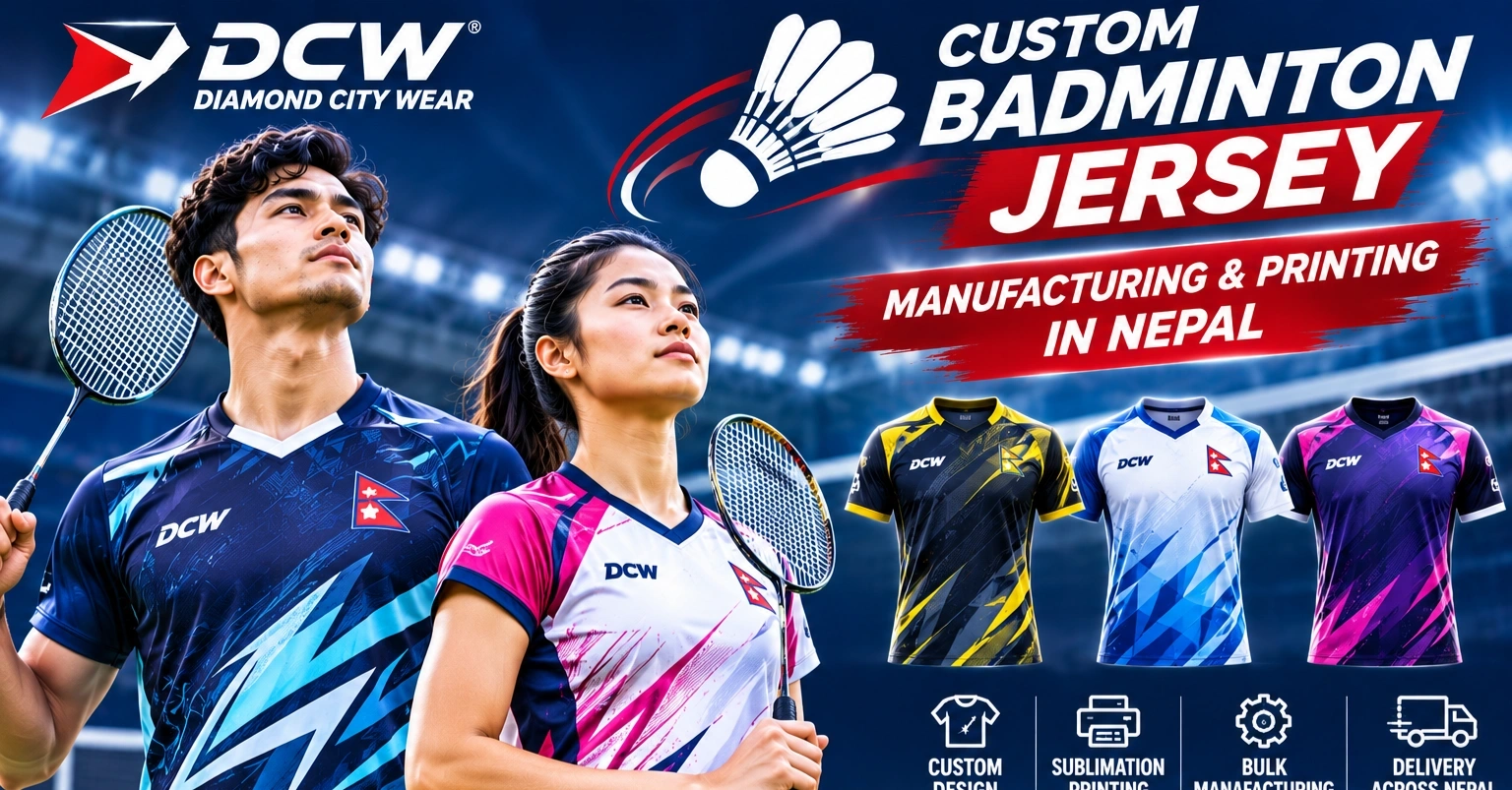 Badmintion Jersey In Nepal
Custom Badminton Jersey Manufacturer in Nepal | Design, Printing & Wholesale | DCW
Looking for a custom badminton jersey manufacturer in Kathmandu, Nepal? Diamond City Wear (DCW) offers custom badminton jersey design, printing and sportswear manufacturing for badminton clubs, academies, schools, colleges, universities, tournaments and corporate teams. Explore customized badminton
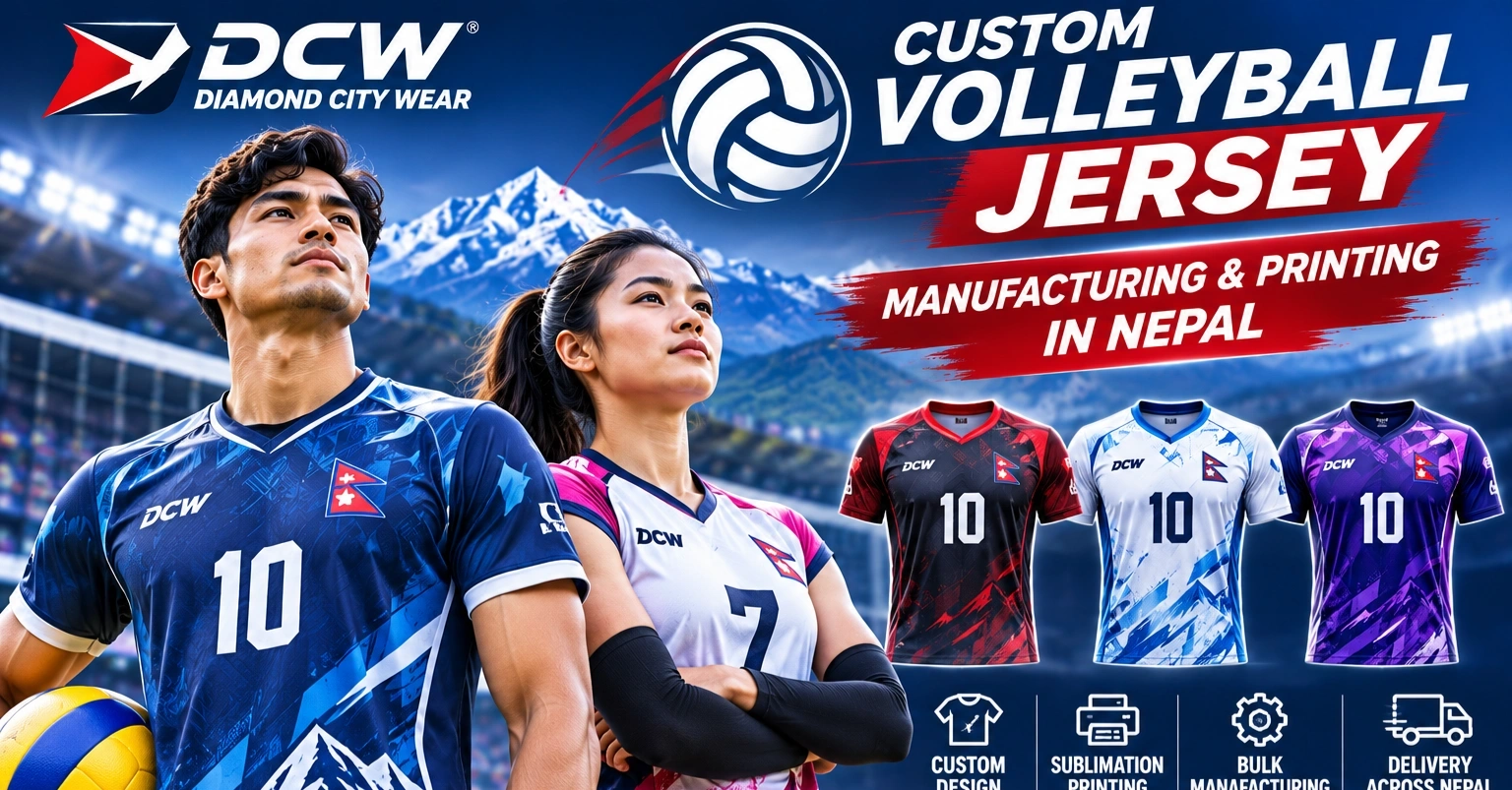 Custom Jersey Nepal
Custom Volleyball Jersey Manufacturer in Nepal | Design, Printing & Wholesale | DCW
Looking for a custom volleyball jersey manufacturer in Kathmandu, Nepal? Diamond City Wear (DCW) offers custom volleyball jersey design, sublimation printing, matching shorts, libero jerseys, training uniforms, tracksuits, hoodies, jackets and wholesale sportswear manufacturing for volleyball clubs,
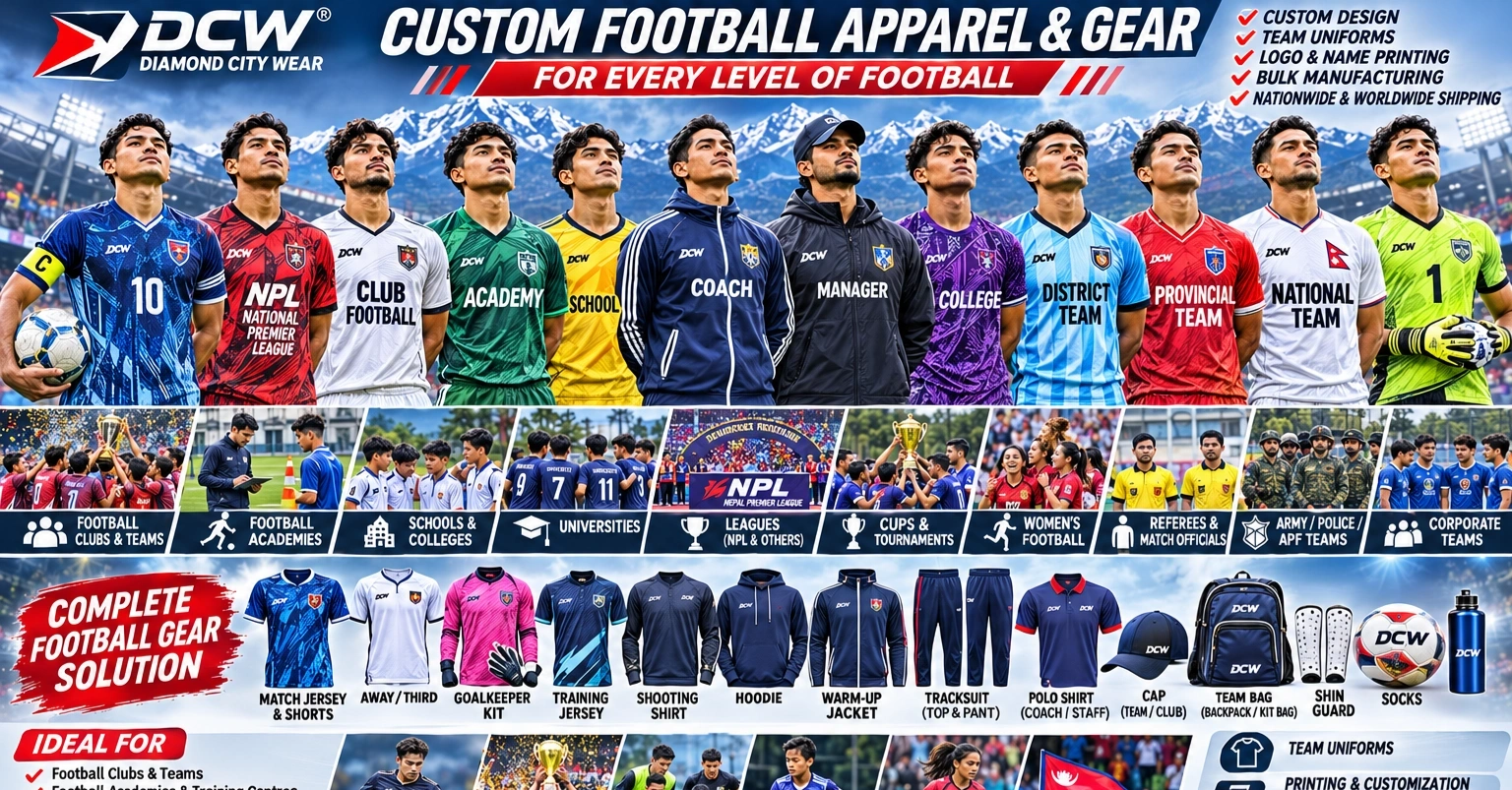 Custom Jersey Nepal
Custom Football Jersey Manufacturer in Kathmandu Nepal | Design, Printing, Wholesale & Garment Manufacturing | DCW
Looking for a custom football jersey manufacturer in Kathmandu, Nepal? Diamond City Wear (DCW) specializes in custom football jersey design, sublimation printing, manufacturing and wholesale garment supply. We produce football jerseys, shorts, goalkeeper kits, training uniforms, tracksuits, hoodies
