Complete Jersey Manufacturing Process: Design to Final Delivery
How a custom jersey is manufactured
A custom sports jersey combines design, fabric, printing, garment construction and finishing. Each stage affects the final appearance and fit. Understanding the process helps teams and businesses prepare accurate requirements and approve their order with confidence.
1. Customer brief and requirements
The process begins with the sport, product type, quantity and intended use. The customer shares team colours, logos, sponsor artwork, player names, numbers, sleeve preference and any reference designs. Clear instructions reduce revisions and help the manufacturer prepare an accurate quotation.
2. Artwork and jersey design
The design team develops the front, back and other required views. This stage considers colour placement, panels, collar, sleeves, sponsor positions and numbering. The artwork should reflect the garment's actual construction so that important elements are not placed across seams or unsuitable areas.
3. Design approval
The customer reviews the mockup and checks every visible detail. Confirm logo spelling, player names, numbers, colours, sponsor placement and garment style. Any correction should be made before production. The approved design becomes the reference for printing and manufacturing.
4. Fabric selection and preparation
Choose a fabric suitable for the sport and printing method. Polyester and microfiber fabrics are common for many custom jerseys. Fabric is checked and prepared for the next stage. The exact material, weight and construction should be confirmed for the product being ordered.
5. Printing
For sublimation jerseys, the approved artwork is printed onto transfer paper using the required colour setup. The design is then transferred to compatible fabric using heat and pressure. Other branding methods, such as DTF, screen printing or embroidery, may be used depending on the garment and design.
6. Cutting
Printed or prepared fabric is cut into garment panels according to the pattern and size specifications. Accurate cutting helps maintain panel shape and alignment. Each size should follow the agreed measurement chart, and pieces must be organized to avoid mixing player-specific details.
7. Stitching and assembly
Garment panels are sewn together to create the jersey. This may include shoulders, sides, sleeves, collar and other construction details. Stitching quality, seam alignment and garment shape are checked during assembly. The construction should match the approved design and product specification.
8. Personalization and finishing
Player names, numbers, sponsor marks, labels and other finishing details are checked according to the order. If these elements are included during printing, their position and spelling should still be inspected. Loose threads and minor finishing issues should be addressed before packing.
9. Quality inspection
Finished jerseys are checked for measurements, print clarity, colour consistency, stitching, panel alignment, names, numbers and overall appearance. A clear order sheet makes it easier to verify that every player receives the correct item. Any identified issue should be reviewed before dispatch.
10. Packing and delivery
Approved garments are folded, packed and prepared for delivery. The order is checked against the quantity and size list. Delivery arrangements depend on destination, shipping method and order requirements.
How customers can help the process
- Send clear logos and artwork files.
- Provide a complete list of names, numbers and sizes.
- Approve the final mockup before production.
- Confirm quantity, fabric and customization.
- Review the quotation, payment terms and timeline.
Jersey manufacturing at Diamond City Wear
Diamond City Wear is a custom sportswear manufacturer based in Kathmandu, Nepal. The production workflow can include artwork, digital printing, cutting, stitching, ironing, quality inspection and packing. Custom football, cricket, basketball and volleyball jerseys can be discussed with the team along with shorts and other teamwear.
Start with a complete brief
A well-prepared order helps each production stage run smoothly. Share your design reference, quantity, size breakdown and customization requirements so the manufacturer can review the project and plan the work.
Related stories
 Sportswear
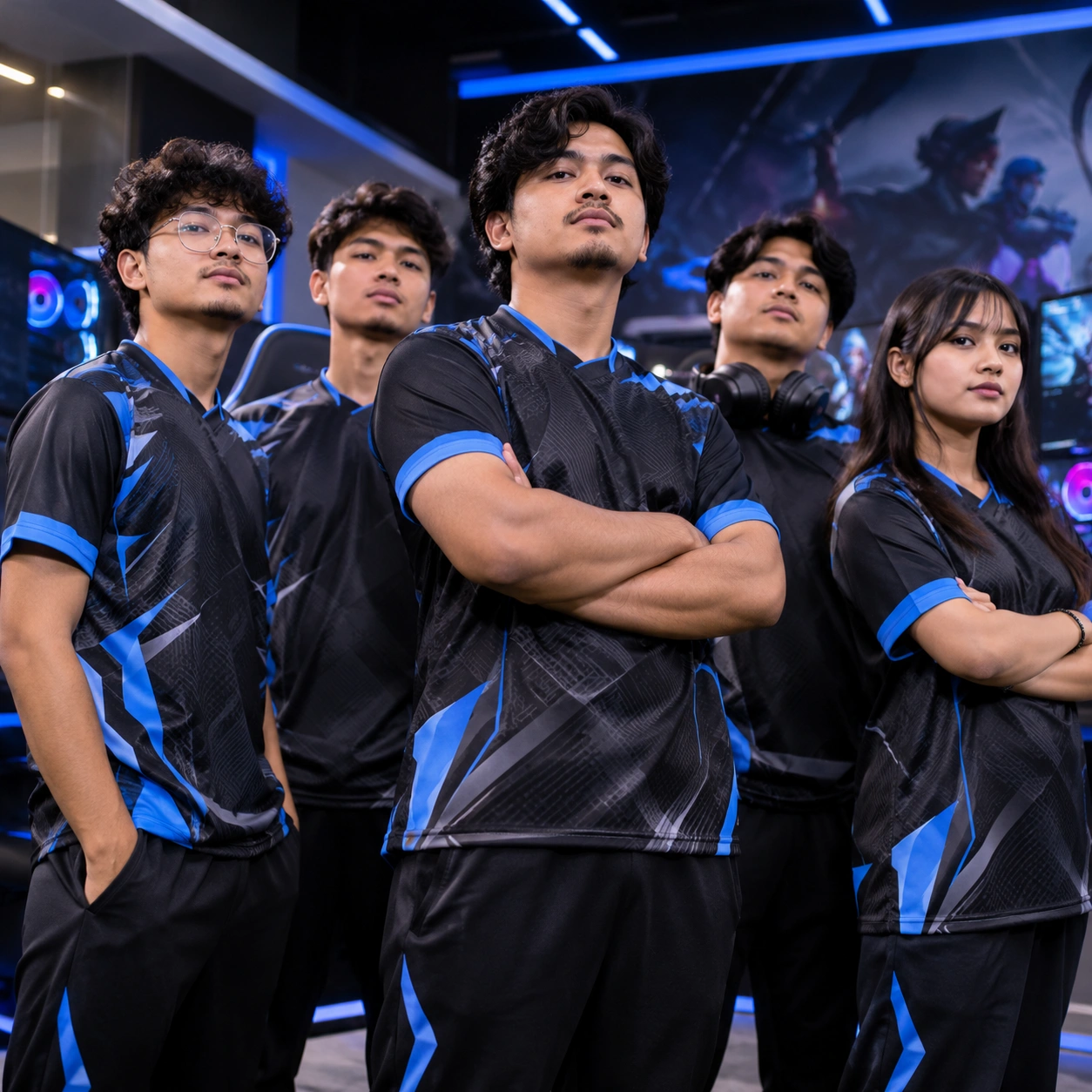
Custom Esports Jersey Manufacturer in Nepal: Design, Printing and Bulk Production
Explore custom esports jersey design and manufacturing in Nepal, including team branding, sublimation printing, player names, sponsor logos and bulk production planning with Diamond City Wear.
Custom Rugby Jersey Manufacturing in Nepal: Design, Fabric and Teamwear
A practical guide to custom rugby jerseys in Nepal, covering team design, garment construction considerations, branding, player details and bulk teamwear orders.
Custom Basketball Shorts Manufacturer in Nepal: Team Shorts, Printing and Bulk Orders
Learn how to plan custom basketball shorts in Nepal, including team colors, fit, waistband details, logo placement, matching jerseys and bulk order preparation.