Best Fabrics for Sportswear: Polyester, Microfiber and Performance Materials
Why fabric choice matters in sportswear
Fabric influences how a sports garment feels, performs, looks and lasts. A football jersey, training shirt, tracksuit and hoodie have different requirements. Choosing material based on the sport, climate, fit and production method helps create apparel that suits its intended use.
Polyester for sportswear
Polyester is widely used in performance apparel because it is lightweight, durable and generally dries faster than many natural fibres. It can be suitable for jerseys, training tops, shorts and other activewear. Polyester fabrics are available in different constructions and weights, so the name alone does not describe the full quality or feel.
What is microfiber?
Microfiber describes very fine fibres that can be made from synthetic materials such as polyester. In sportswear, microfiber fabrics are often selected for a smooth hand feel and lightweight construction. Their performance depends on yarn, knit structure, finishing and fabric weight. Ask for a fabric sample when touch and drape are important.
Breathability and moisture management
Breathability relates to how easily air moves through a fabric, while moisture management describes how sweat spreads or moves away from the skin. These qualities depend on fibre, yarn, knit structure and finishing. Mesh panels can be used in selected areas to improve ventilation, but panel placement should also consider strength and appearance.
Fabric weight and construction
Fabric weight is often expressed in grams per square metre (GSM). A lower GSM fabric may feel lighter, but lighter does not automatically mean better. Consider opacity, durability, stretch, drape and the sport's requirements. Knit structures such as interlock, mesh and pique have different surface and performance characteristics.
Choosing fabric for different products
- Football and cricket jerseys: Lightweight polyester or suitable microfiber knits are common choices.
- Basketball and volleyball uniforms: Select material and fit that support movement and the desired drape.
- Tracksuits: Consider warmth, surface finish, stretch and whether the garment is for training or travel.
- Hoodies and sweatshirts: Fabric weight, softness, warmth and fleece construction are important.
- Polos: Pique or other polo-appropriate knits can provide a structured appearance.
Printing compatibility
Printing method should be considered before selecting fabric. Sublimation is commonly used on compatible polyester fabrics and can support all-over colourful artwork. DTF and screen printing can be suitable for selected graphics on a wider range of garment surfaces, subject to testing. Embroidery is a stitched decoration method and needs a stable area that can support the design.
Durability and care
Durability depends on fabric construction, stitching, finishing, print method and garment care. Ask about colourfastness, pilling, snagging and expected washing conditions. Follow the care instructions supplied for the actual garment and avoid assuming every polyester fabric behaves identically.
Questions to ask your manufacturer
- What is the fibre composition and GSM?
- What knit structure and finish are used?
- Can I review a fabric swatch or sample?
- Is the material suitable for my printing method?
- How does it perform for the intended sport and climate?
- What care instructions should be provided?
Fabric options at Diamond City Wear
Diamond City Wear manufactures custom jerseys, shorts, tracksuits, jackets, hoodies, polos and other apparel in Nepal. Fabric selection depends on the product, design, intended use and availability. Share your requirements so the team can discuss suitable material and customization options before confirming an order.
Make the choice based on the garment
The best sportswear fabric is the one that meets the garment's actual needs. Compare samples, check specifications and confirm printing compatibility rather than choosing by fabric name alone.
Related stories
 Sportswear
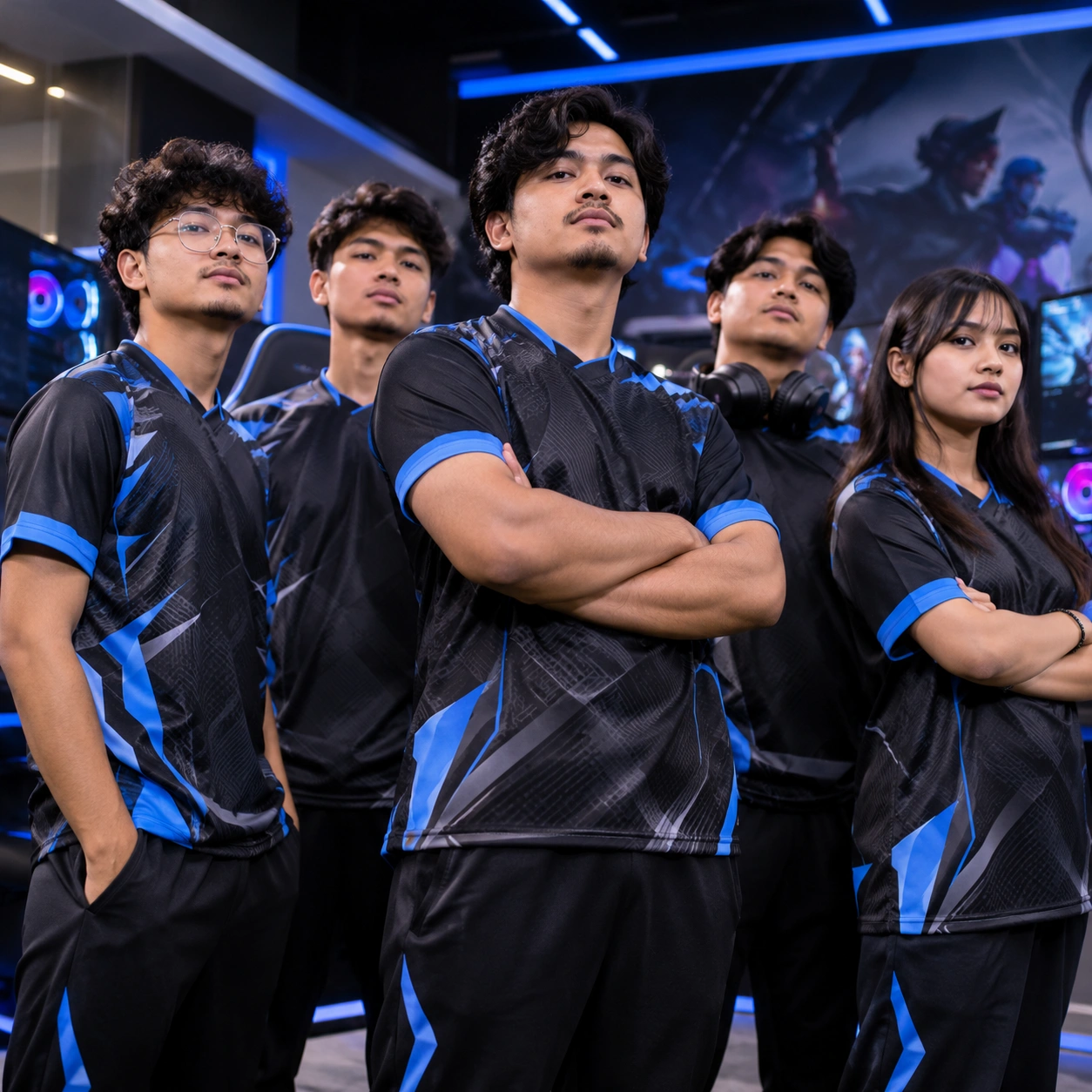
Custom Esports Jersey Manufacturer in Nepal: Design, Printing and Bulk Production
Explore custom esports jersey design and manufacturing in Nepal, including team branding, sublimation printing, player names, sponsor logos and bulk production planning with Diamond City Wear.
Custom Rugby Jersey Manufacturing in Nepal: Design, Fabric and Teamwear
A practical guide to custom rugby jerseys in Nepal, covering team design, garment construction considerations, branding, player details and bulk teamwear orders.
Custom Basketball Shorts Manufacturer in Nepal: Team Shorts, Printing and Bulk Orders
Learn how to plan custom basketball shorts in Nepal, including team colors, fit, waistband details, logo placement, matching jerseys and bulk order preparation.